
The benefits of outdoor play for children are far greater than many parents realise. In an age of screens, tablets, and digital entertainment, the simple joy of outdoor play has never been more important for children’s development. Research consistently shows that children who engage in regular outdoor play experience significant benefits across physical, mental, social, and emotional domains.
From building strong bodies to developing confidence and social skills, outdoor play forms a crucial foundation for healthy childhood development. This guide explores the evidence-based benefits of outdoor play and explains how climbing frames and garden play equipment can support your child’s growth and wellbeing.
The Physical Benefits of Outdoor Play
Building Strong Bodies and Motor Skills
Outdoor play provides natural opportunities for children to develop physical capabilities.
Gross Motor Development
Activities like climbing, swinging, running, and jumping develop:
- Large muscle groups in arms, legs, and core
- Balance and coordination
- Spatial awareness and body control
- Flexibility and range of movement
Climbing frames are particularly effective for developing:
- Upper body strength from pulling up
- Core stability from balancing
- Hand-eye coordination from reaching and grasping
- Leg strength from climbing and jumping
Fine Motor Development
Outdoor environments challenge fine motor skills through:
- Manipulating climbing grips and holds
- Opening and closing playground gates
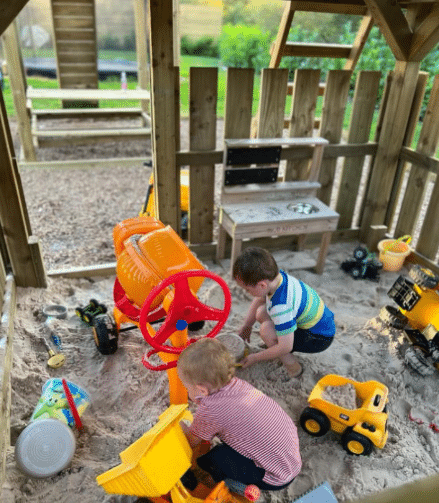
- Playing with natural materials like sand and soil
- Drawing, writing, and creating outdoors
Cardiovascular Health
Active outdoor play provides essential cardiovascular exercise:
- Strengthens heart and lungs
- Improves circulation
- Supports healthy weight management
- Establishes lifelong fitness habits
Vitamin D and Bone Health
Sunlight exposure during outdoor play triggers vitamin D production, which is essential for:
- Calcium absorption and bone mineralisation
- Immune system function
- Muscle strength development
- Overall growth and development
Regular outdoor play helps children build strong bones that last a lifetime.
Reducing Myopia Risk
Research has found a significant link between outdoor play and reduced short-sightedness in children. Children spending more time outdoors have lower rates of myopia, likely due to natural light exposure and looking at distant objects instead of close screens.
Cognitive Benefits of Outdoor Play
Enhanced Learning and Concentration
Research shows that children who play outdoors before classroom activities demonstrate improved attention and behaviour.
Outdoor activity helps to:
- Reduce attention difficulties
- Improve concentration spans
- Enhance focus on academic tasks
- Support children with ADHD
Problem-Solving Skills
Climbing frames present natural challenges such as:
- Planning how to reach a high platform
- Working out safe climbing routes
- Understanding cause and effect
- Making decisions about risk
Creativity and Imagination
Outdoor play encourages:
- Imaginative role-play
- Creating games and rules
- Storytelling
- Building and construction play
Social and Emotional Development
Building Social Skills
Climbing frames naturally encourage:
- Taking turns
- Helping younger children
- Playing imaginative games
- Forming friendships
Emotional Wellbeing Benefits
Outdoor play supports:
- Confidence and self-esteem
- Resilience
- Stress reduction
- Improved mood
- Emotional regulation
How Climbing Frames Support Development
Age-Appropriate Development
Toddlers (18 months–3 years)
- Balance and coordination
- Leg strength
- Cause and effect learning
Preschool (3–5 years)
- Motor skill refinement
- Social play
- Confidence building
Primary (5–8 years)
- Risk assessment
- Coordination
- Cooperation
Older Children (8+)
- Advanced climbing
- Leadership
- Independent play
Development-Supporting Features
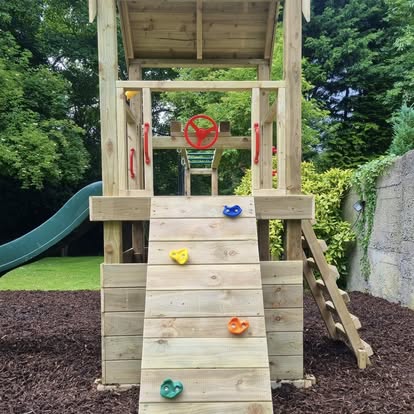
Climbing Walls
- Upper body strength
- Coordination
- Problem-solving
Swings
- Balance
- Core stability
- Calming sensory input
Monkey Bars
- Grip strength
- Upper body development
- Friendly competition
Slides
- Risk/reward learning
- Body awareness
- Sequential thinking
Creating an Outdoor Play-Friendly Garden
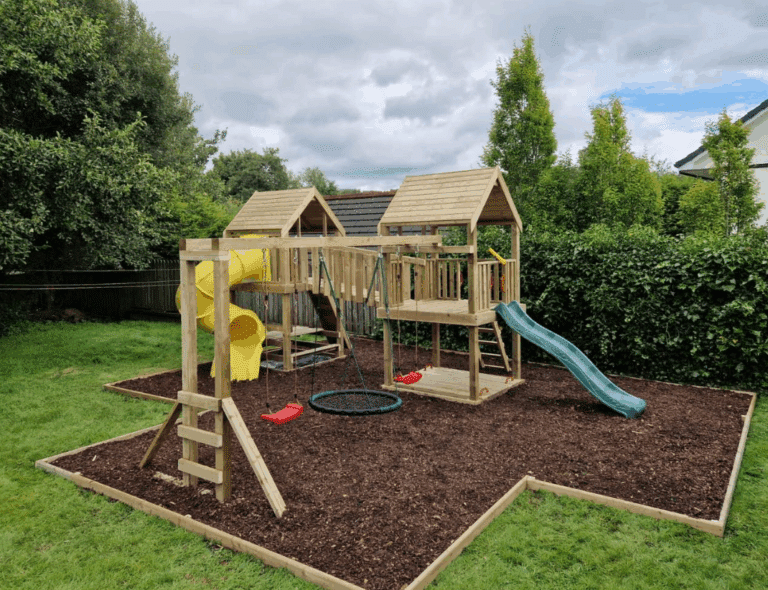
A garden climbing frame provides:
- Constant access to outdoor play
- A safe, contained environment
- Physical activity opportunities
- Years of developmental benefit
When choosing a climbing frame, consider:
- Garden space
- Age range
- Budget
- Durability
- Safety certification
Frequently Asked Questions:
What age can my child start using a climbing frame?
Most climbing frames are suitable from age 3+. Always follow manufacturer guidelines.
How much outdoor play does my child need?
Young children need around 3 hours of activity daily. Older children require at least 60 minutes of moderate to vigorous activity.
Will a climbing frame improve coordination?
Yes. Climbing frames develop balance, coordination and motor planning.
Are climbing frames safe?
Quality frames are designed with safety standards in mind. Proper installation and supervision are essential.
How long will a climbing frame last?
With proper maintenance, quality timber frames can last 15–20 years or more.
Conclusion
The benefits of outdoor play for children’s development are clear. From physical strength and cognitive growth to emotional wellbeing and social skills, outdoor play builds foundations that last a lifetime.
A climbing frame in your garden creates daily opportunities for active, meaningful development. In a world dominated by screens, investing in outdoor play equipment is investing in your child’s health, happiness, and future.